





Why Your California-Grown Almond Milk May Spell Bad News For the Bee Population
Too much of a good thing?
-
CategoryFarm + Table, Makers + Entrepreneurs, Sustainability
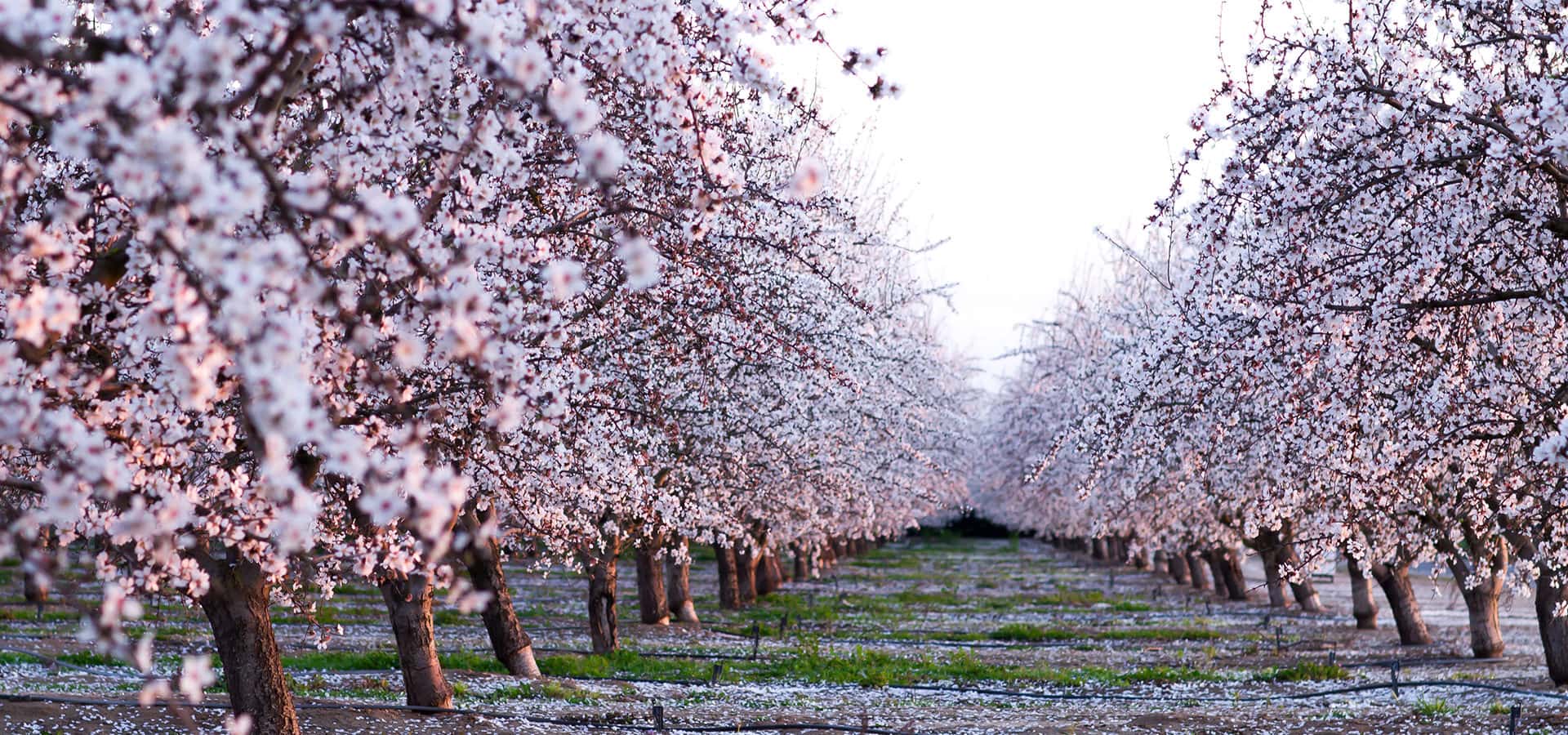
If you follow environmental news you likely know that the honeybees—the pollinators of our agriculture that play a pivotal role in food production—are under serious duress. In fact, bees die in greater numbers than any other fish or animals raised as livestock combined. In the winter of 2018-19, 50 billion bees (more than 1/3 of commercial U.S. bee colonies) were wiped out.
According to The Guardian, “Beekeepers attributed the high mortality rate to pesticide exposure, diseases from parasites and habitat loss. However, environmentalists and organic beekeepers maintain that the real culprit is something more systemic: America’s reliance on industrial agriculture methods, especially those used by the almond industry, which demands a large-scale mechanization of one of nature’s most delicate natural processes.
“Environmental advocates argue that the huge, commercially driven proliferation of the European honeybees used on almond farms is itself undermining the ecosystem for all bees. Honeybees out-compete diverse native bee species for forage, and threaten the endangered species that are already struggling to survive climate change. Environmentalists argue a better solution is to transform the way large-scale agriculture is carried out in the U.S.
“Like all bees, honeybees thrive in a biodiverse landscape. But California’s almond industry places them in a monoculture where growers expect the bees to be predictably productive year after year.”
You can read more about the honeybee’s precarious situation and the almond industry’s perceived role here.


San Francisco–Based Artist Jay Mercado Takes Still Life to the Next Level
Objects of affection.
Drumroll Please … Here’s Your 2020 Coachella Valley Music and Arts Festival Lineup
Rage Against the Machine, Travis Scott and Frank Ocean will headline the two-weekend event.
I’ll Have What She’s Having at The Skirball Cultural Center Celebrates Delis
It’s the whole schmear.